UK
UK Canada
 Australia
 USA
USA New Zealand
 Ireland
 Switzerland
 Germany
 Italy
Italy Austria
 Dubai
Dubai Finland
 France
 Latvia
 Lithuania
 Luxembourg
 Malta
Malta Netherlands
 Poland
 Spain
Spain Europe

Study in Australia
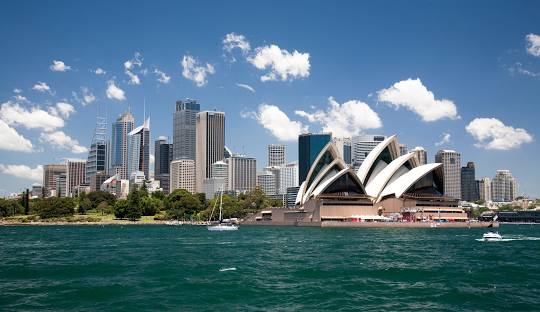
Australia is a vibrant, diverse, and globally connected country known for its high-quality education system, cutting-edge research, and welcoming environment for international students. With a multicultural society, stunning natural landscapes, and world-class cities like Sydney, Melbourne, and Brisbane, Australia is one of the top destinations for higher education globally.
Key Facts
Everything you need to know at a glance.
Why Study in Study in Australia?
Discover the benefits of choosing this destination for your education.
Quality Education
Ranked 3rd for international education worldwide.
Research Excellence
Strong in fields like medicine, engineering, and environmental science.
Work While You Study
Up to 48 hours per fortnight (20 hours/week) during semesters.
Multicultural Experience
Safe, inclusive, and tolerant environment.
Vibrant Student Life
Access to clubs, societies, and events.
High Graduate Employability
Australian degrees are respected globally.
University-Specific Scholarships
Financial aid opportunities for international students.
1. Australia Awards Scholarships (AAS)
Fully funded by Australian Government (DFAT). Covers full tuition fees, return airfare, establishment allowance, living stipend (AUD 30,000 approx./year), and OSHC.
2. Destination Australia Scholarships
Funded by Government to encourage study in regional campuses. Provides AUD 15,000 per year, renewable for multiple years.
3. Research Training Program (RTP)
For Masters by Research and PhD. Covers tuition fee offset, living stipend (up to AUD 34,000/year), thesis allowance, and health cover.
4. University-Specific Scholarships
Examples: Melbourne Graduate Research (100% fee waiver + living), Sydney International Research, Monash Merit, ANU Chancellor's.
Major Intakes
Admission cycles for international students.
1. February Intake (Semester 1) – Major Intake
Also called: Start researching & shortlisting: March – June (previous year) | Intake starts: February – early MarchPrimary and most popular intake. All universities and colleges offer a full range of undergraduate and postgraduate programs. Higher competition due to volume of applications.
2. July Intake (Semester 2) – Mid-Year Intake
Also called: Start preparation: September – November | Intake starts: July – early AugustSecond most popular intake. A wide range of programs available (though fewer than February). Ideal for students who missed February or are still preparing.
3. November Intake (Semester 3 / Summer Term) – Limited Intake
Also called: Research & plan: May – July | Intake starts: Late October – NovemberAvailable at a few universities (e.g., University of New South Wales, CQUniversity). Fewer course options (mostly postgraduate and selected UG courses). Often includes fast-track options or bridging courses.
Intake Comparison
| Intake | Starts | Applications Open | Course Availability | Scholarship Availability | Competition |
|---|---|---|---|---|---|
| February | Feb – March | July – Oct (previous year) | High | High | High |
| July | July – August | Nov – Mar | High | Moderate | Moderate |
| November | Oct – Nov | Aug – Sept | Low | Low | Low |
Admission Requirements
What you need to apply to Australia Universities.
1. Choose a Course and Institution
Research programs and verify entry requirements.
2. Meet Entry Requirements
Academics + English Language (IELTS, TOEFL, PTE).
3. Apply Online
Apply to universities via university portal or agents.
4. Receive Offer Letter
Conditional or Unconditional offer letter.
5. Accept Offer & Pay Fees
Pay the required tuition fee deposit.
6. Get Confirmation of Enrolment (CoE)
Essential document to apply for the visa.
7. Apply for Student Visa
Apply for Subclass 500 visa with CoE, OSHC, GTE/GS statement, and financials. Processing time: 4 to 12 weeks. Fee: Approx AUD 1600.
Career Growth & Post-Study Work
High-demand sectors and Graduate Route Visa opportunities.
Post-Study Work Visa (Subclass 485)
2 to 6 years depending on qualification and region | Graduate Work Stream & Post-Study Work Stream
Information Technology (IT)
- Growth: Booming tech sector, Software Developers, Cyber Security, Data Analysts.
- Top Employers: Tech hubs in Sydney and Melbourne
- Salary Range: High-paying roles, part of MLTSSL list
Healthcare & Nursing
- Growth: Growing demand for healthcare professionals (Nurses, Physiotherapists) due to an ageing population.
- Top Employers: Hospitals and clinics across Australia
- Salary Range: High demand, very secure
Engineering
- Growth: Civil, Mechanical, Mining, and Environmental Engineers needed for large infrastructure projects.
- Top Employers: Mining companies, government projects
- Salary Range: Excellent remuneration
Education
- Growth: Early Childhood, Secondary School Teachers (Math, Science), Vocational Education.
- Top Employers: Regional Australia especially needs qualified teachers
- Salary Range: Steady and rewarding
Permanent Residency (PR) Process
Australia offers numerous pathways for skilled professionals and graduates to obtain Permanent Residency (PR).
Skilled Independent Visa (Subclass 189)
Points-tested PR visa for skilled workers (MLTSSL) without needing employer or state sponsorship. Requires 65+ points.
Skilled Nominated Visa (Subclass 190)
PR visa sponsored by a state or territory government based on regional skill needs. Requires living in the nominating state for 2 years.
Skilled Work Regional Visa (Subclass 491)
5-year temporary visa for skilled professionals in regional Australia, leading to PR (Subclass 191).
Employer Sponsored Visas
Subclass 186 (Permanent) or Subclass 482 (TSS - Temporary with PR pathway) sponsored by an Australian employer.
Types of Australia Visas
A quick overview of visas for international students.
| Visa Type | Purpose | Work Allowed? | Can Apply for PR? |
|---|---|---|---|
| Subclass 500 | Study | Duration of course | No Direct Pathway |
| Subclass 485 | Post-study work | 2–4 years | Pathway via 189/190 |
| Subclass 189 | Independent skilled PR | Permanent | Yes (Direct PR) |
| Subclass 190 | State nominated PR | Permanent | Yes (Direct PR) |
| Subclass 491 | Regional provisional visa | 5 years | Pathway via 191 |
| Subclass 186/482 | Employer-sponsored work | 2–4 years / PR | Yes |
Frequent Answer Question
Quick Answers To Your Visa Queries
Book Your Consultation
Fill out the form below and our experts will get in touch with you shortly.