UK
UK Canada
 Australia
 USA
USA New Zealand
 Ireland
 Switzerland
 Germany
 Italy
Italy Austria
 Dubai
Dubai Finland
 France
 Latvia
 Lithuania
 Luxembourg
 Malta
Malta Netherlands
 Poland
 Spain
Spain Europe

Study in Germany
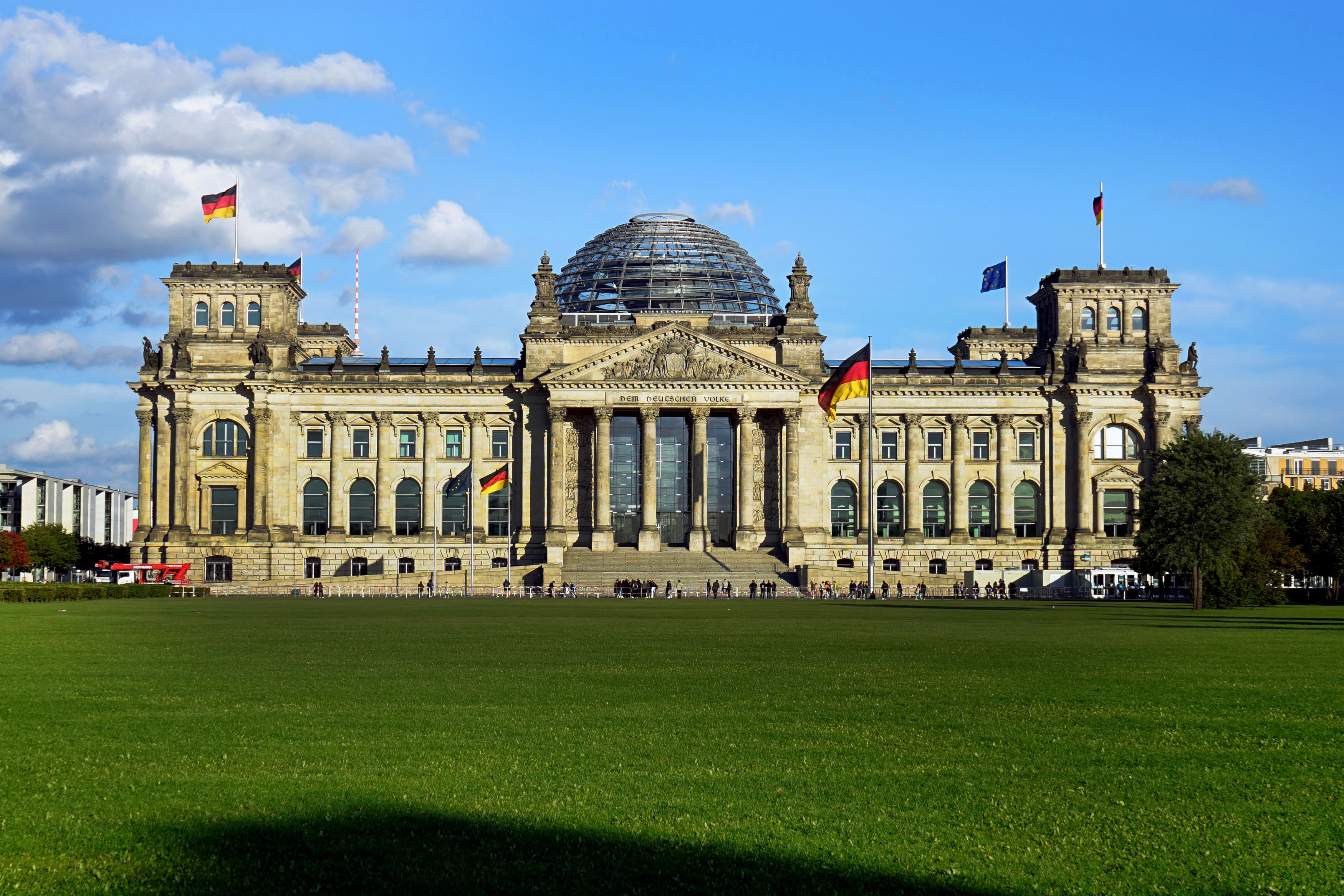
Germany is a top destination for international students seeking world-class education, cutting-edge research, and affordable living. Known for its innovation in technology and engineering, Germany combines academic excellence with a strong economy and a rich cultural experience. With tuition-free education at most public universities, Germany attracts over 450,000 international students each year.
Key Facts
Everything you need to know at a glance.
Why Study in Study in Germany?
Discover the benefits of choosing this destination for your education.
Tuition-Free Education
At public universities (mostly for UG).
Globally Recognized Degrees
High standards of academic excellence.
Cutting-Edge Research & Tech
Access to top-tier research and innovation hubs.
English-Taught Programs
Especially Master's degrees.
Education System
Understanding the levels of education and grading system.
Levels of Education
Bachelor's
3–4 yearsUndergraduate degree (BA, BSc, BEng, etc.)
Master's
1–2 yearsPostgraduate degree (MA, MSc, MBA, etc.)
PhD/Doctorate
3–5 yearsResearch-based doctoral programs
Grading System
Types of Institutions
Understanding the different types of universities available.
Universitäten (Universities)
Focus on theoretical knowledge and research. Offer Bachelor's, Master's, and PhD programs (e.g., LMU Munich).
Fachhochschulen (Applied Sciences)
Practical, industry-focused education. Emphasis on internships and real-world training.
Colleges of Art, Film, and Music
Specialize in creative disciplines. Require portfolios/auditions.
University-Specific Scholarships
Financial aid opportunities for international students.
DAAD Scholarships
Monthly stipend (€934 grads, €1,200 docs), travel, health insurance.
Deutschlandstipendium
€300/month for at least two semesters (merit-based + community engagement).
Heinrich Böll Foundation Scholarships
Up to €934/month (Master's) or €1,200/month (PhD) for students with excellent academic records.
Konrad-Adenauer-Stiftung (KAS)
€934/month (PG) or €1,200/month (PhD) for students with strong academics and political/social involvement.
Friedrich Ebert Stiftung (FES) Scholarship
Up to €934/month + health insurance coverage.
Erasmus+ Scholarships
For students enrolled in a German university as part of an exchange program.
University-Specific Scholarships
E.g., RWTH International Academy, TUM Scholarship, Mannheim Scholarship.
Major Intakes
Admission cycles for international students.
Winter Intake
Also called: Main Intake (October – March)Widest range of courses and maximum university participation.
Summer Intake
Also called: Secondary Intake (April – September)Limited courses; mostly in Master's programs, especially in STEM fields.
Top Universities
Ranked by QS World University Rankings 2025.
| Rank (QS 2025) | University | UG Fees / Year | PG Fees / Year | Popular Courses |
|---|---|---|---|---|
| #37 | Technical University of Munich (TUM) | Free | ~€200/semester | Engineering, CS, MBA |
| #54 | Ludwig Maximilian University of Munich | Free | ~€250/semester | Medicine, Law, Humanities |
| #65 | Heidelberg University | Free | ~€300/semester | Life Sciences, Chemistry, History |
| #87 | Humboldt University of Berlin | Free | ~€315/semester | Arts, Social Sciences, Natural Sci |
| #93 | Karlsruhe Institute of Technology (KIT) | Free | ~€300/semester | Mechanical Engg., IT, AI |
| #98 | Free University of Berlin | Free | ~€315/semester | Political Science, History |
| #99 | RWTH Aachen University | Free | ~€300/semester | Engineering, Robotics, CS |
| #108 | University of Freiburg | Free | ~€310/semester | Forestry, Biosciences |
| #111 | University of Tübingen | Free | ~€300/semester | Philosophy, Psychology, Theology |
| #130 | University of Göttingen | Free | ~€300/semester | Molecular Bio, Physics |
| #132 | University of Bonn | Free | ~€300/semester | Economics, Neurosciences, Math |
| #138 | University of Hamburg | Free | ~€330/semester | Physics, Law, Media Studies |
| #147 | Technical University of Berlin | Free | ~€300/semester | Mechatronics, Urban Planning, CS |
| #162 | University of Cologne | Free | ~€275/semester | Business, Sociology, Education |
| #180 | University of Stuttgart | Free | ~€300/semester | Aeronautics, Data Engg. |
| #190 | University of Mannheim | Free | ~€290/semester | Management, Political Science |
| #224 | TU Dresden | Free | ~€270/semester | Microelectronics, CS, Biotech |
| #360 | Jacobs University Bremen (Private) | €20,000 | €20,000 | Business, CS, Psychology |
Admission Requirements
What you need to apply to Germany Universities.
General Requirements
Application form, APS Certificate, Transcripts, SOP, LORs, CV, Motivation letter.
Language Requirements
English-taught: IELTS 6.0–6.5 or German B2-C1. German-taught: TestDaF/DSH.
Winter Intake Timeline
Apply: May-July. Visa: Start July/Aug. Deadline: July 15 (typically).
Summer Intake Timeline
Apply: Nov-Jan. Visa: Start Jan/Feb. Deadline: Jan 15 (typically).
Career Growth & Post-Study Work
High-demand sectors and Graduate Route Visa opportunities.
Job Seeker Visa
International students can apply for an 18-month Job Seeker Visa after completing their studies to find a qualified job.
Engineering & Manufacturing
- Growth: Dominance in automotive & mechanical
- Top Employers: BMW, Mercedes, Bosch, Siemens
- Salary Range: €45k – €55k
IT & Computer Science
- Growth: High demand for AI & Data experts
- Top Employers: SAP, IBM, Deutsche Telekom, Google
- Salary Range: €50k – €65k
Business & Finance
- Growth: Frankfurt is a European financial hub
- Top Employers: Deutsche Bank, Allianz, PwC
- Salary Range: €45k – €60k
Healthcare & Life Sciences
- Growth: Aging population & healthcare innovation
- Top Employers: Bayer, Roche, Fresenius, BioNTech
- Salary Range: €50k – €70k
Environmental Sciences
- Growth: Commitment to green energy
- Top Employers: Siemens Energy, E.ON, RWE
- Salary Range: €42k – €55k
Permanent Residency (PR) Process
Germany offers a structured and accessible pathway to obtain Permanent Residency (PR).
After Graduation
Apply for an 18-month Job Seeker Visa after completing your studies.
Find a Qualified Job
Once you secure a job relevant to your field, apply for an EU Blue Card or German Residence Permit.
Residency Duration for PR
With EU Blue Card: PR after 33 months (or 21 months with B1 German). Without Blue Card: PR after 5 years.
Eligibility Criteria for PR
Valid permit, 21-33 months employment, pension contributions, B1 German, financial stability.
German Citizenship (Optional)
Apply for citizenship after 5–8 years of legal stay.
Types of Germany Visas
A quick overview of visas for international students.
| Visa Type | Purpose | Work Allowed? | Can Apply for PR? |
|---|---|---|---|
| Student Visa (Type D) | Full-time academic programs (>90 days) | 120 full / 240 half days | Course duration |
| Short-Term Visa (Type C) | Language/summer courses (<90 days) | No | Up to 90 days |
| Research/PhD Visa | Academic research or PhD | Yes | >90 days |
| Job Search Visa | Seek employment post-graduation | Yes (unrelated jobs allowed) | 18 months |
| Work Visa / EU Blue Card | Employment in skilled jobs | Full-time | Depends on contract |
| Family Reunification | Join family members | Yes | Linked to sponsor |
Frequent Answer Question
Quick Answers To Your Visa Queries
Book Your Consultation
Fill out the form below and our experts will get in touch with you shortly.