UK
UK Canada
 Australia
 USA
USA New Zealand
 Ireland
 Switzerland
 Germany
 Italy
Italy Austria
 Dubai
Dubai Finland
 France
 Latvia
 Lithuania
 Luxembourg
 Malta
Malta Netherlands
 Poland
 Spain
Spain Europe

Study in Switzerland
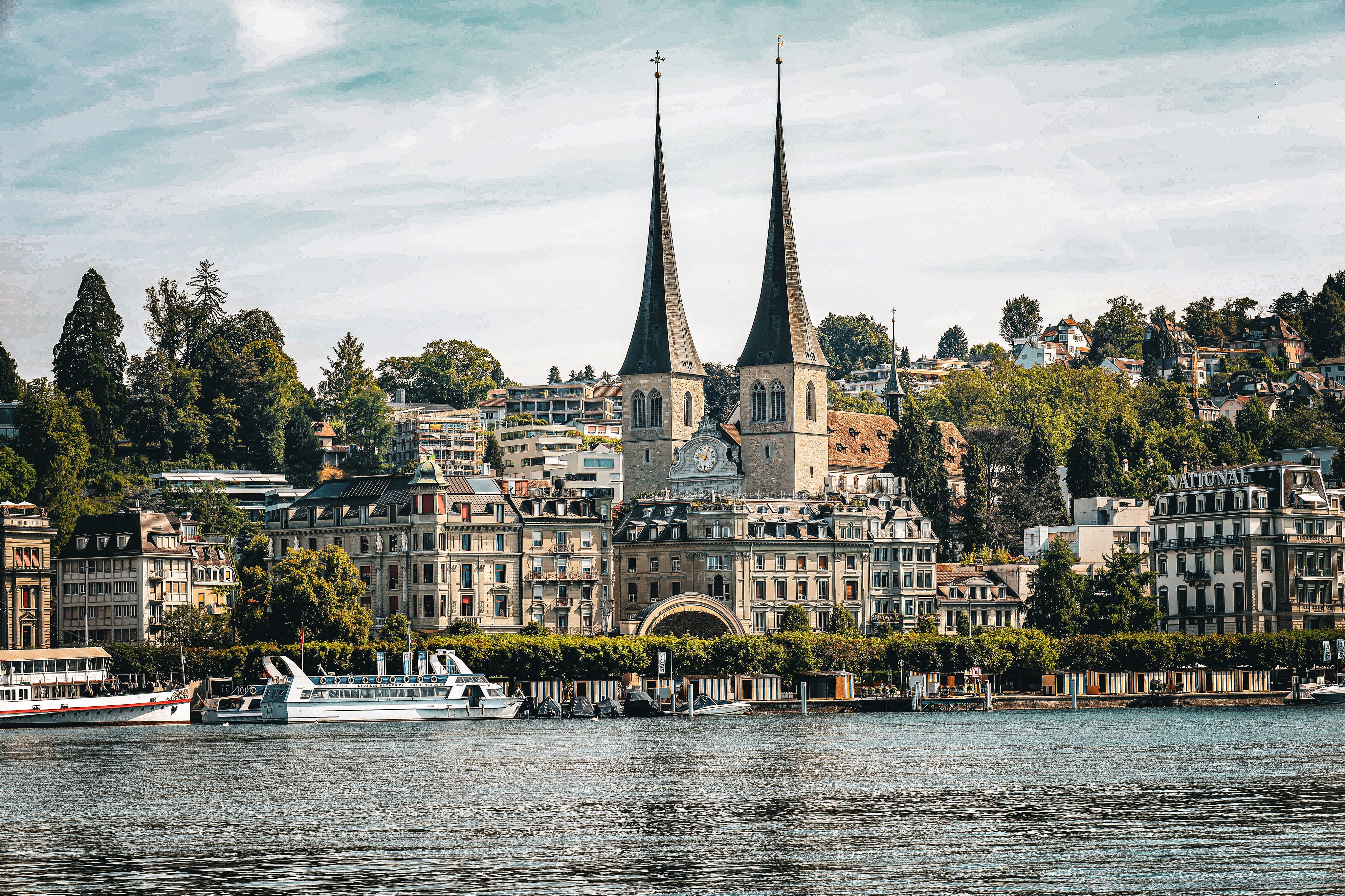
Switzerland, officially known as the Swiss Confederation, is a landlocked country located in the heart of Europe. Known for its political neutrality, world-class infrastructure, scenic beauty, and high standard of living, Switzerland also boasts a robust education system with globally recognized universities.
Key Facts
Everything you need to know at a glance.
Why Study in Study in Switzerland?
Discover the benefits of choosing this destination for your education.
World-Class Education
Home to ETH Zurich and EPFL, both in the global top 20.
Multilingual Environment
Study in English while living in a multicultural and multilingual society.
Innovation & Research Hub
Ideal for STEM, business, and hospitality programs.
Global Exposure
Host to numerous international organizations including the UN and WHO.
Education System
Understanding the levels of education and grading system.
Levels of Education
Bachelor's Degree
3 yearsFoundation in academic and professional subjects.
Master's Degree
1.5–2 yearsSpecialized education in chosen field.
Doctorate (PhD)
3–5 yearsResearch-focused doctorate programs.
Diploma Programs
6 months – 1 yearOffered mainly by private institutions (esp. in hospitality/business).
Grading System
Essential Guide
Costs, Intakes, and Key Aspects at a glance.
| Key Aspect | Details |
|---|---|
| Choose Course & Institution | Shortlist programs based on academic background and career goals. |
| Check Eligibility | IELTS (6.0–7.0) / TOEFL iBT (80–100) for English-taught programs. |
| Prepare Documents | Transcripts, Passport, SOP, LORs, Proof of financial resources. |
| Submit Application | Apply through university portal. Fall intake deadline usually Feb to April. |
University-Specific Scholarships
Financial aid opportunities for international students.
Swiss Government Excellence Scholarships
Monthly stipend (~CHF 1,920), tuition fee waiver, health insurance, airfare for Master's/PhD/Postdoc.
ETH Zurich Excellence Scholarship
CHF 12,000/year + tuition fee waiver for excellent academic results.
EPFL Excellence Fellowships
CHF 10,000/semester + housing support. High academic merit required.
University of Lausanne (UNIL) Master's Grants
CHF 1,600/month for 10 months (excluding summer) for international students.
University of Geneva Excellence Masters Fellowships
CHF 10,000–15,000/year for excellent academic performance.
Les Roches & Glion Scholarships
Up to 20% of tuition fees based on merit, leadership potential, or financial need.
Erasmus+ Scholarships
Available to students studying in partnership programs between Swiss & EU universities.
External Scholarships (World Bank, Fulbright, AAUW)
For students from developing countries, US citizens, or women pursuing postgraduate studies.
Major Intakes
Admission cycles for international students.
Fall Intake
Also called: Autumn SemesterMajor intake with the widest program availability for most courses.
Spring Intake
Also called: Spring SemesterLimited program availability, usually for select master's programs or specific fields.
Intake Comparison
| Intake | Starts | Applications Open | Course Availability | Scholarship Availability | Competition |
|---|---|---|---|---|---|
| Fall Intake | September – January | Jan – April | High | High | High |
| Spring Intake | February – June | Aug – Oct (Prev Year) | Low | Low | Medium |
Top Universities
Ranked by QS World University Rankings 2025.
| Rank (QS 2025) | University | UG Fees / Year | PG Fees / Year | Popular Courses |
|---|---|---|---|---|
| #7 | ETH Zurich | 1,300–1,600 CHF | 1,300–1,600 CHF | Engineering, Computer Science |
| #16 | EPFL | 1,266 CHF | 1,266 CHF | Life Sciences, Robotics |
| #91 | University of Zurich | 1,500–2,000 CHF | 1,500–2,000 CHF | Medicine, Law, Finance |
| #131 | University of Geneva | 1,000 CHF | 1,000 CHF | International Relations, Law |
| #126 | University of Bern | 1,500 CHF | 1,500 CHF | Medicine, Environmental Sci |
| #220 | University of Lausanne | 1,160 CHF | 1,160 CHF | Biology, Business |
| #136 | University of Basel | 1,700 CHF | 1,700 CHF | Life Sciences, Pharmacy |
| #372 | University of St. Gallen (HSG) | 3,300–6,000 CHF | 3,300–6,000 CHF | Business, Economics |
| #345 | Università della Svizzera italiana (USI) | 4,000 CHF | 4,000 CHF | Informatics, Architecture |
| #751-800 | Lucerne University of Applied Sciences | 1,200–2,500 CHF | 1,200–2,500 CHF | Design, Engineering |
| #701-750 | Zurich University of Applied Sciences | 1,300–2,000 CHF | 1,300–2,000 CHF | IT, Engineering, Business |
| - | Les Roches Global Hospitality | 40,000+ CHF | 40,000+ CHF | Hospitality Management |
| - | Glion Institute of Higher Education | 30,000+ CHF | 30,000+ CHF | Hospitality Management |
| #6 (Hosp) | EHL Hospitality Business School | 35,000+ CHF | 35,000+ CHF | Luxury Management |
| - | EU Business School (Geneva/Zurich) | 14,000–20,000 CHF | 14,000–20,000 CHF | Business Admin |
| - | Geneva Business School | 13,000–16,000 CHF | 13,000–16,000 CHF | MBA, Finance |
| - | Kalaidos University of Applied Sciences | 2,000–3,000 CHF | 2,000–3,000 CHF | Business, IT |
| #801-1000 | University of Neuchâtel | 1,000 CHF | 1,000 CHF | Law, Humanities |
Admission Requirements
What you need to apply to Switzerland Universities.
General Requirements
Completed application form, SOP, LORs, Academic Transcripts, CV/Resume, Passport copy, Financial proof.
Language Requirements
English-taught: IELTS (6.0–7.0) / TOEFL iBT (80–100). German/French/Italian: CEFR B2 level certificate.
Fall Intake Timeline
Shortlist: Aug-Nov (prev year). Apply: Jan-April. Visa: May-July. Enroll: Aug-Sept.
Spring Intake Timeline
Shortlist: May-July (prev year). Apply: Aug-Oct. Visa: Nov-Jan. Enroll: February.
Career Growth & Post-Study Work
High-demand sectors and Graduate Route Visa opportunities.
Job Search Permit
After graduation, non-EU/EFTA students are allowed to stay in Switzerland for up to 6 months to look for a job related to their field of study.
Finance & Banking
- Growth: Major financial hub
- Top Employers: UBS, Credit Suisse, Swiss Re
- Salary Range: High remuneration
Pharmaceuticals & Life Sciences
- Growth: Basel is a pharma hub
- Top Employers: Novartis and Roche
- Salary Range: Highly competitive
Information Technology & Engineering
- Growth: Growing demand for software engineers
- Top Employers: Tech giants, ETH Zurich spinoffs
- Salary Range: Excellent
Hospitality & Tourism
- Growth: Home to world's best hospitality schools
- Top Employers: Luxury hotel chains, event planning
- Salary Range: Variable based on role
Luxury Goods & Watchmaking
- Growth: Global center for luxury
- Top Employers: Rolex, Swatch, Patek Philippe
- Salary Range: High remuneration
International Organizations & NGOs
- Growth: Geneva hosts global orgs (WHO, UN, WTO)
- Top Employers: UN, WTO, ICRC
- Salary Range: Variable based on role
Permanent Residency (PR) Process
Switzerland offers pathways to permanent residency through continuous stay and employment.
Student Visa (National Type D)
Valid for the duration of your study program, renewable annually. Allows part-time work.
Job Search Permit
6 months non-renewable permit after graduation to find a job related to your field of study.
Work Permit (Permit B)
Based on employer contract (renewable yearly). Requires job offer and employer sponsorship.
Permanent Residency (Permit C)
Granted after 5–10 years of legal stay (10 years for most nationals; 5 years for EU/EFTA). Requires proof of language and integration.
Citizenship (Naturalization)
Ordinary Naturalization after 10 years of legal residence. Simplified options for spouses of Swiss citizens.
Types of Switzerland Visas
A quick overview of visas for international students.
| Visa Type | Purpose | Work Allowed? | Can Apply for PR? |
|---|---|---|---|
| Type D – Student Visa | Full-time study | 15 hrs/week | Course duration |
| Type C – Short-Term Visa | Language courses, research | No | Up to 90 days |
| Type D – Research/PhD Visa | Academic research or PhD | Yes | >90 days |
| Job Search Permit | Seek employment post-graduation | Yes | 6 months |
| Type D – Work Visa | Employment | Full-time | Depends on contract |
| Family Reunification | Join family in Switzerland | Depends | Linked to sponsor |
| Tourist Visa (C) | Travel/tourism | No | Up to 90 days |
Frequent Answer Question
Quick Answers To Your Visa Queries
Book Your Consultation
Fill out the form below and our experts will get in touch with you shortly.